
Few kitchen disruptions create as much uncertainty as an unexpected power failure. The clock starts immediately, yet safe decisions depend on more than simply counting hours. FDA food safety power outage refrigerator 4 hours freezer 48 hours guidance provides useful reference points, while food type, storage temperature, door activity, and freezer fullness add important context. Homa Appliances also places refrigeration within the broader conversation about temperature control and everyday food preservation. Knowing which foods are vulnerable and which can remain safely stored helps households respond calmly rather than relying on appearance or smell.
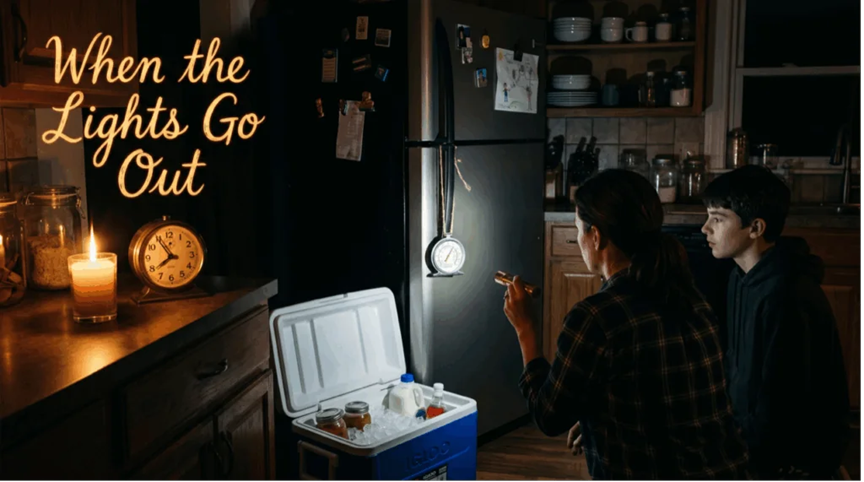
Understanding The Four-Hour Threshold
Refrigerated food becomes increasingly vulnerable as the internal temperature rises. The FDA recommends keeping refrigerators at or below 40°F (4°C), because temperatures above that level create more favorable conditions for harmful bacteria. During an outage, an unopened refrigerator can generally keep food cold for about four hours, although actual performance varies with insulation, room temperature, food quantity, and door openings.
The four-hour period should not be treated as permission to keep checking the refrigerator. Every door opening allows warmer air to enter and cold air to escape. Keeping the door closed preserves the remaining cold air and reduces unnecessary temperature fluctuations.
Food category matters just as much as elapsed time. Raw meat, seafood, poultry, dairy products, cooked leftovers, and egg-based foods are particularly sensitive. Once these items have spent too long above safe refrigeration temperatures, appearance and odor cannot reliably indicate whether harmful microorganisms have multiplied.
Foods That Usually Need To Go
Raw animal products require particular caution after prolonged warming. Beef, chicken, fish, shellfish, and similar foods can support bacterial growth once temperatures move into the danger zone. Cooked dishes deserve equal attention because leftovers containing rice, pasta, meat, or other moist ingredients can also become unsafe.
Perishable dairy products should be discarded when they have remained above 40°F (4°C) for the time specified by food-safety guidance. Milk, cream, yogurt, soft cheeses, and egg-based custards are among the foods that should not be evaluated simply by taking a small taste. Opened mayonnaise and prepared dressings should be assessed according to their product-specific storage instructions and food-safety guidance.
Cut melons and other cut low-acid fruits also deserve attention because cutting exposes additional surfaces to contamination. Tofu and comparable protein products should be handled cautiously as well. The safest approach is to follow established food-safety guidance instead of attempting to rescue questionable perishables.
Foods With Greater Stability
Not every refrigerator item becomes unsafe at the same rate. Hard cheeses generally tolerate temperature fluctuations better than soft dairy products, while butter and margarine can usually remain useful under less demanding conditions. Whole fruits and vegetables also have different storage characteristics because their protective outer surfaces remain intact.
Pantry-style foods stored in the refrigerator can sometimes remain suitable even after perishables have reached their discard point. Opened jam, peanut butter, ketchup, mustard, vinegar-based pickles, and similar condiments typically present less concern than milk or cooked meat. Unopened bottled liquids also fall into a different risk category.
Bread and many baked goods should not automatically be discarded simply because the refrigerator warmed. Their safety profile differs from moisture-rich foods such as leftovers or dairy. Sorting food according to its composition prevents unnecessary waste while keeping high-risk items out of meals.
Freezer Decisions Require Another Approach
Frozen food follows a different timeline because the surrounding environment begins at a much lower temperature. A full freezer can generally maintain safe freezing conditions for roughly 48 hours if the door stays closed, while a half-full freezer may retain its cold for around 24 hours. Food quantity matters because frozen packages themselves provide thermal mass.
The familiar FDA food safety power outage refrigerator 4 hours freezer 48 hours guideline therefore contains two distinct timeframes rather than one universal rule. Frozen food that still contains ice crystals or has a food temperature of 40°F (4°C) or below may generally be refrozen or cooked, although quality may decline.
Grouping frozen packages together before an expected outage can slow temperature increases. Ice packs or containers of frozen water may provide additional thermal mass, while unnecessary door openings should be avoided. Such preparation becomes especially useful in regions where storms or grid interruptions are common.
Making The Final Safety Decision
Temperature measurement provides stronger evidence than visual inspection. Appliance thermometers can show whether refrigerated food remained within the recommended range and can help assess freezer conditions after electricity returns. Recording the time the outage began also gives households a useful reference point.
A practical sorting process starts with the most perishable foods. Meat, seafood, poultry, milk, eggs, leftovers, and soft dairy products should receive immediate attention once the refrigerator has been above 40°F for an unsafe duration. Less perishable foods can then be assessed separately according to their characteristics.
The FDA food safety power outage refrigerator 4 hours freezer 48 hours framework works best as part of a broader decision process. Temperature, duration, food composition, freezer capacity, and door activity all influence the result. Smelling or tasting questionable food is not a dependable safety test, so uncertainty should favor established food-safety guidance.
Conclusion
Power restoration marks the end of the outage, not necessarily the end of the food-safety assessment. Careful sorting, temperature checks, and sensible handling can reduce both health risks and unnecessary food waste. Homa Appliances represents the refrigeration side of that equation, where insulation, cabinet design, and temperature management contribute to everyday cold storage. A clear understanding of the four-hour refrigerator window and longer freezer timeframe gives households a practical method for deciding what can stay, what should be discarded, and how to prepare more effectively for the next interruption.